
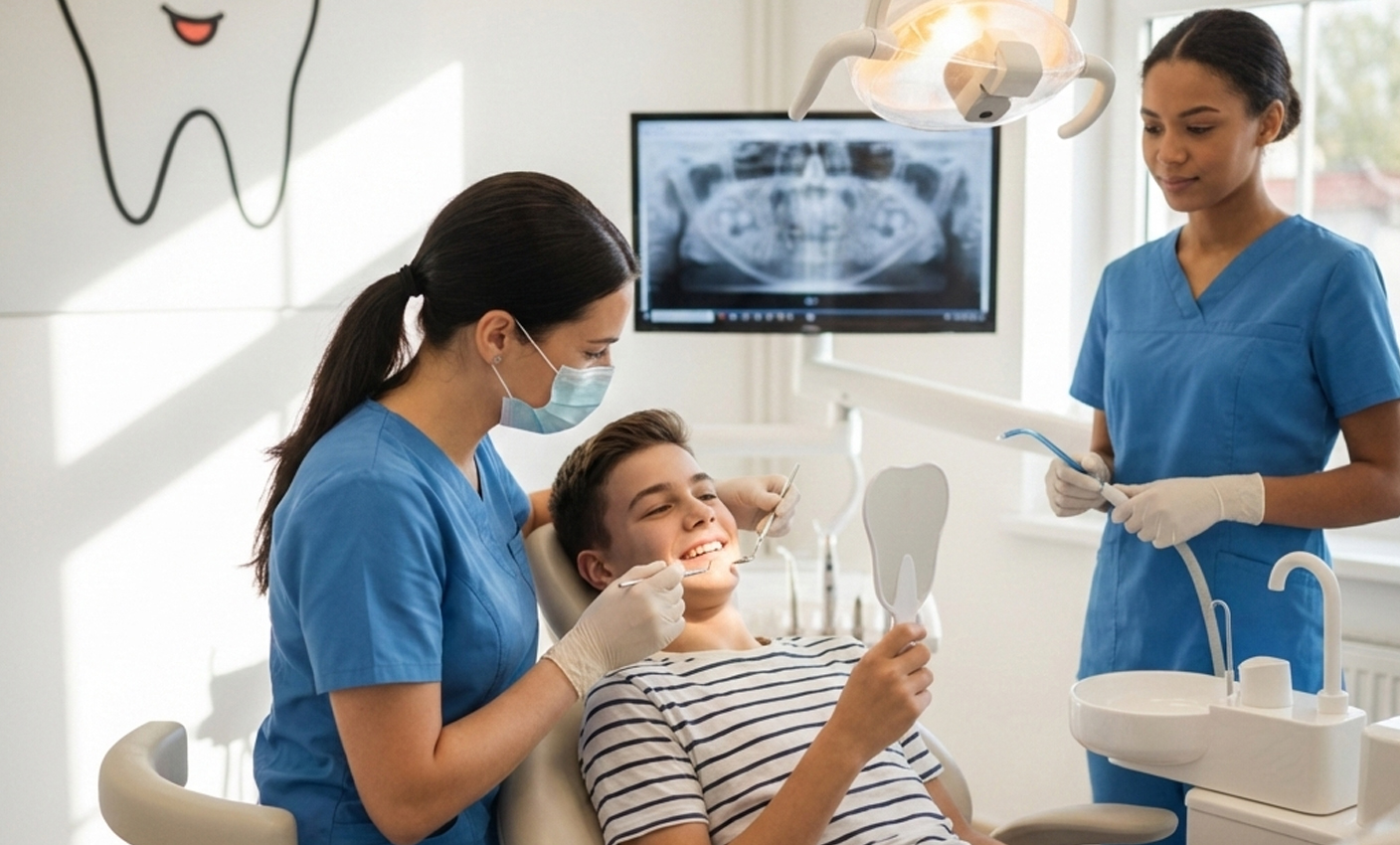
Choosing dental care for a child can feel like a big decision. Parents want an office that protects their child’s smile while also helping them feel safe, heard, and comfortable. A positive experience now can shape how a child approaches oral health for years to come.
When families search for a pediatric dentist in Monroe Township, NJ, it helps to look beyond convenience alone. The right dental team should explain care in age-appropriate language, welcome parents’ questions, emphasize prevention, and adjust each visit to the child’s needs.
Advanced Dental of Monroe provides pediatric dentistry services for local families at its Monroe Township office. This guide explains what parents can expect from children’s dental care and how they can prepare for a smoother visit.
This article provides general educational information and is not a substitute for an examination or personalized advice from a dentist. Parents should contact a qualified dental professional about a child’s symptoms, treatment needs, or dental injury.
Why Children’s Dental Care Deserves Special Attention
Children are not simply small adults. Their mouths are developing, their comfort levels can change quickly, and they may not have the words to explain what feels unusual. A child-focused dental visit accounts for these differences.
Baby teeth are temporary, but they still matter. They help children chew, speak clearly, and maintain space as permanent teeth develop. Keeping these teeth healthy can also reduce discomfort and help children participate comfortably in school, sports, and everyday activities.
Dental visits also give families an opportunity to ask practical questions. Parents may want guidance on brushing, flossing, fluoride, thumb-sucking, pacifier use, diet, tooth eruption, or protecting teeth during sports. Rather than giving every family the same plan, a dental team can tailor recommendations to the child’s age, habits, and oral health.
What to Look for in a Pediatric Dental Experience
A calm, welcoming approach
A child’s comfort begins before the examination. Friendly greetings, simple explanations, and an unhurried introduction can make unfamiliar surroundings feel more manageable. Some children are ready to participate immediately, while others need time to observe and warm up.
Parents can look for a dental team that avoids shame or pressure. Statements such as “Let’s count your teeth” are often easier for a young child to understand than technical descriptions. Showing an instrument before using it may also reduce uncertainty.
Clear communication with parents
Parents should leave an appointment understanding what the dentist observed and what should happen next. A useful discussion may cover areas that need closer monitoring, home-care techniques, dietary habits, preventive options, or recommended treatment.
Good communication goes both ways. Parents should feel comfortable sharing information about a child’s medical history, medications, sensory preferences, previous dental experiences, or anxiety. These details can help the dental team plan a more supportive visit.
A strong focus on prevention
Preventive care aims to identify concerns early and give families the tools to reduce future problems. Depending on the child’s needs, an appointment may include an examination, professional cleaning, oral-hygiene instruction, and a discussion of protective options.
Advanced Dental of Monroe recommends examination schedules based on each child’s personal oral health. The practice also provides guidance on brushing, flossing, and other care that parents can supervise at home.
Care that can grow with the child
Dental needs change as children grow. A preschooler learning to brush has different needs from a teenager playing contact sports or becoming responsible for daily flossing. An ongoing relationship allows the dental team to monitor development and update recommendations over time.
What Happens During a Child’s Dental Visit?
The details depend on the child’s age, health history, comfort, and reason for visiting. A routine appointment generally begins with a conversation. The dental team may ask about brushing habits, diet, discomfort, recent injuries, or changes noticed at home.
The clinical portion may include a careful look at the teeth, gums, bite, and developing mouth. A cleaning may be completed when appropriate. Dental X-rays are not automatically needed at every visit; the dentist determines whether they are useful based on the child’s individual circumstances.
If the dentist identifies a concern, the parent should receive a clear explanation of the finding and available next steps. Parents can ask why treatment is recommended, whether alternatives exist, how the child’s comfort will be supported, and what to expect afterward.
Not every first appointment needs to accomplish everything at once. For a very young or anxious child, becoming familiar with the office and allowing a brief examination may represent meaningful progress. The goal is to provide necessary care without overlooking the importance of trust.
Helping a Child Feel Comfortable Before the Appointment
Parents can make dental visits easier by preparing in a calm, matter-of-fact way. Long explanations sometimes create more questions than reassurance, especially for younger children. A simple statement such as, “The dentist will look at your teeth and help keep them healthy,” may be enough.
These tips can help:
- Use positive, neutral language. Avoid words that may sound frightening or promising that nothing will feel uncomfortable.
- Schedule thoughtfully. When possible, choose a time when the child is usually rested and not hungry.
- Practice at home. Parents can take turns counting teeth with a toothbrush or reading a child-friendly book about dental visits.
- Bring useful information. A medication list, insurance details, and notes about past dental experiences can help the appointment run smoothly.
- Share specific concerns early. Tell the office about anxiety, sensory sensitivities, communication needs, or a strong gag reflex before the visit.
- Stay encouraging afterward. Praise the child for a specific success, such as opening wide, asking a question, or sitting in the chair.
If a previous appointment was difficult, parents should mention it without assuming the next one will be the same. A different approach, slower pace, or more preparation may improve the experience.
Building Healthy Habits Between Visits
The routines practiced at home have an important role in a child’s oral health. Young children usually need hands-on help with brushing because reaching every surface requires coordination and attention. Older children may still benefit from reminders or a quick check.
Consistency matters more than perfection. Families can connect brushing to reliable parts of the day, such as getting dressed in the morning and preparing for bed. A timer, favorite song, or simple reward chart can help establish the routine without turning it into a struggle.
Food and drink habits also deserve attention. Frequent sipping or snacking can repeatedly expose teeth to sugars and starches. Parents can discuss their child’s typical routine with the dentist rather than focusing only on occasional treats.
Children involved in sports may need protection against dental injuries. Advanced Dental of Monroe advises families to consider a well-fitting mouthguard for sports-related protection and offers custom-fitted appliances. The most suitable option depends on the child’s activity, age, and dental development.
When a Child Needs Prompt Dental Attention
Routine preventive visits are important, but some concerns should not wait for the next scheduled checkup. Parents should contact a dentist promptly if a child has persistent dental pain, facial or gum swelling, a broken tooth, uncontrolled oral bleeding, signs of infection, or an injury involving the teeth or jaw.
A knocked-out permanent tooth is an urgent dental situation. Advanced Dental of Monroe advises parents to remain calm, find the tooth, and avoid touching its root. The office or another emergency dental provider should be contacted immediately for situation-specific instructions. A knocked-out baby tooth should not be placed back into the socket unless a dentist specifically directs otherwise.
Severe swelling, difficulty breathing or swallowing, significant facial trauma, or other potentially life-threatening symptoms require emergency medical attention. When parents are unsure how urgent a problem is, calling a dental professional is the safest next step.
Questions to Ask When Choosing Children’s Dental Care
A brief conversation with an office can help parents decide whether it is a good fit. Useful questions include:
- How does the team help children who feel nervous?
- Can parents share sensory, medical, or communication needs in advance?
- What preventive services are available for children?
- How are treatment options and costs explained?
- What should a parent do if a child has a dental emergency?
- How often should this specific child return for preventive care?
- When would the office recommend referral to a pediatric dental specialist?
The term “pediatric dentist” is sometimes used broadly in online searches for children’s dental care. However, a formally trained pediatric dental specialist has completed specialty education beyond dental school. Parents who specifically require specialty care should ask about the treating dentist’s credentials and whether a referral would be appropriate.
Frequently Asked Questions
How often should a child visit the dentist?
The right schedule depends on the child’s oral health, age, risk factors, home care, and treatment history. The dentist can recommend an individualized interval after evaluating the child.
Are baby teeth worth treating if they will eventually fall out?
Yes. Baby teeth support chewing, speech, comfort, and spacing for developing permanent teeth. Whether a specific tooth needs treatment depends on the problem, the child’s age, and how long the tooth is expected to remain.
What if a child is afraid of the dentist?
Parents should tell the dental office before the appointment. The team may use a slower introduction, simple explanations, demonstrations, or a shorter visit. Avoiding shame and recognizing small successes can help confidence develop gradually.
Does every child need dental X-rays?
No single schedule is appropriate for every child. A dentist considers factors such as age, development, symptoms, dental history, and what can be seen during the examination before recommending X-rays.
Can children receive dental care at a family dental practice?
Many family dental practices provide preventive and restorative care for children. Some children may benefit from referral to a pediatric dental specialist because of complex medical needs, extensive treatment, significant anxiety, age, or another clinical consideration.
How can parents find pediatric dental care in Monroe Township?
Parents can start by reviewing the practice’s children’s services, approach to comfort, location, scheduling policies, and professional credentials. Advanced Dental of Monroe offers pediatric dentistry services at 475 Spotswood Englishtown Road in Monroe Township, NJ.
A Comfortable Start to Lifelong Oral Health
The right dental experience combines attentive clinical care with patience, communication, and prevention. Parents do not need to wait until a child has pain to begin building a relationship with a dental team. Routine care creates opportunities to monitor development, strengthen home habits, and address concerns before they become more disruptive.
Families looking for children’s dental care or a pediatric dentist in Monroe Township, NJ, can contact Advanced Dental of Monroe to ask questions or request an appointment. The practice is located at 475 Spotswood Englishtown Road, Monroe Township, NJ 08831. A conversation with the dental team can help parents understand which next step is appropriate for their child.